
Built to survive the flight home.
A keynote should do more than fill an hour. It should change how your team works when they get back to the office.
Every talk is customized to the specific situation your audience is in, built on one of two foundations: It’s Not Rocket Science applies the thinking developed while leading people strategy for a company building a new type of rocket engine. Can I Have Your Attention? applies a decade of research into how technology impacts focus and communication.
Also in every talk? Jokes. Lots of jokes. Because life is too short not to have fun along the way. (But no dad jokes—my kids prohibited them.)
What does your audience need?
Two series. Four starting points. Every talk is built for the people in the room.








Do you speak about artificial intelligence?
Short answer: Yes.
Longer answer: I have been writing and speaking about how technology changes attention and behavior at work since 2012.
AI is being adopted faster than any workplace technology before it, and it is reshaping work through thousands of everyday decisions: when to use it, when to slow down, what to hand off, and where people need to stay fully engaged. That is what I work on with leaders and teams.
I also lead a team and run a business, so I use AI under the same conditions the audience does.
What I will not do is demo this week’s tools, because next week they are different. Or tell you whether AI ends death and taxes or ends humanity.
It’s Not Rocket Science

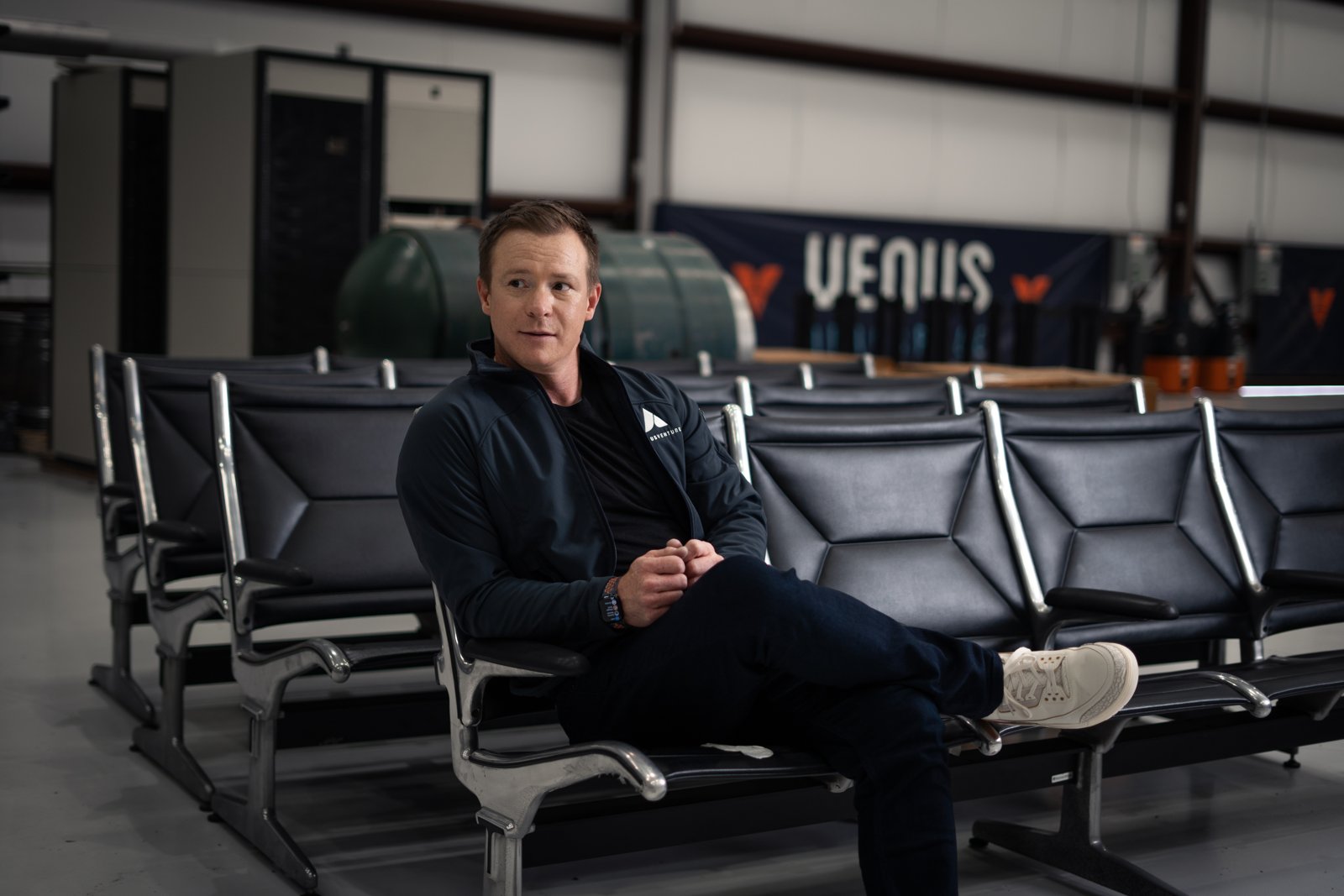
Curt Steinhorst was Head of People at Venus Aerospace, the company that flew the world’s first high-thrust rotating detonation rocket engine. This series is what that work taught him about culture and leadership: what people need to do difficult work well, and what leaders can stop asking of them. Two presentations, Rethinking Leadership and Rethinking Culture. Either one can be built around a change your organization is going through.
It’s Not Rocket Science · Talk 01
Rethinking Leadership
A new model for leadership in the AI-driven workplace.
Rethinking Leadership
A new model for leadership in the AI-driven workplace.Our model of leadership has needed an overhaul for years. Leaders are expected to make good decisions without enough information, keep up with a flood of messages, be available whenever someone needs them, and somehow still have time to think. More and more of the job has become keeping up.
AI can help with that. It can make information easier to find and take some of the load off. But it cannot make a group work well together. The human work we’ve labeled “soft” cannot keep being left until everything else is done.
In May 2025, Venus Aerospace flew the world’s first high-thrust rotating detonation rocket engine. Whether it flew came down to the human side of the work: did everyone know their own job and let the others do theirs, could they argue without it getting personal, and did they like each other enough to laugh on a day when a mistake could cost a life?
In this keynote, Curt Steinhorst draws on fifteen years working with leaders from Nike to the U.S. Naval Academy and on his work as Head of People at Venus Aerospace to make the case for a leader’s job that gets easier as the tools get better: what comes off their plate, what stays, and how to build a team that will tell you the truth while there is still time to use it.
It’s Not Rocket Science · Talk 02
Rethinking Culture
Building a culture that does hard things without burning out.
Rethinking Culture
Building a culture that does hard things without burning out.Somewhere along the way, culture went from eating strategy for breakfast to cupcakes for the anniversary/birthday/get well soon monthly party. That version of culture is a distraction from the thing that decides whether a culture is healthy: the work people are asked to do, and how they are asked to do it. The test comes when the work gets hard, when someone has to admit they are stuck, challenge an idea, or try something that might fail.
At Venus Aerospace, the question was how to build a company capable of doing something extraordinarily difficult without burning people out. In the company’s language: How do we move at Mach 9 without burning out? In May 2025, Venus flew the world’s first high-thrust rotating detonation rocket engine, the result of the fastest and most capital-efficient rocket engine development program in history: from idea to flight in under four years and for less than $80 million.
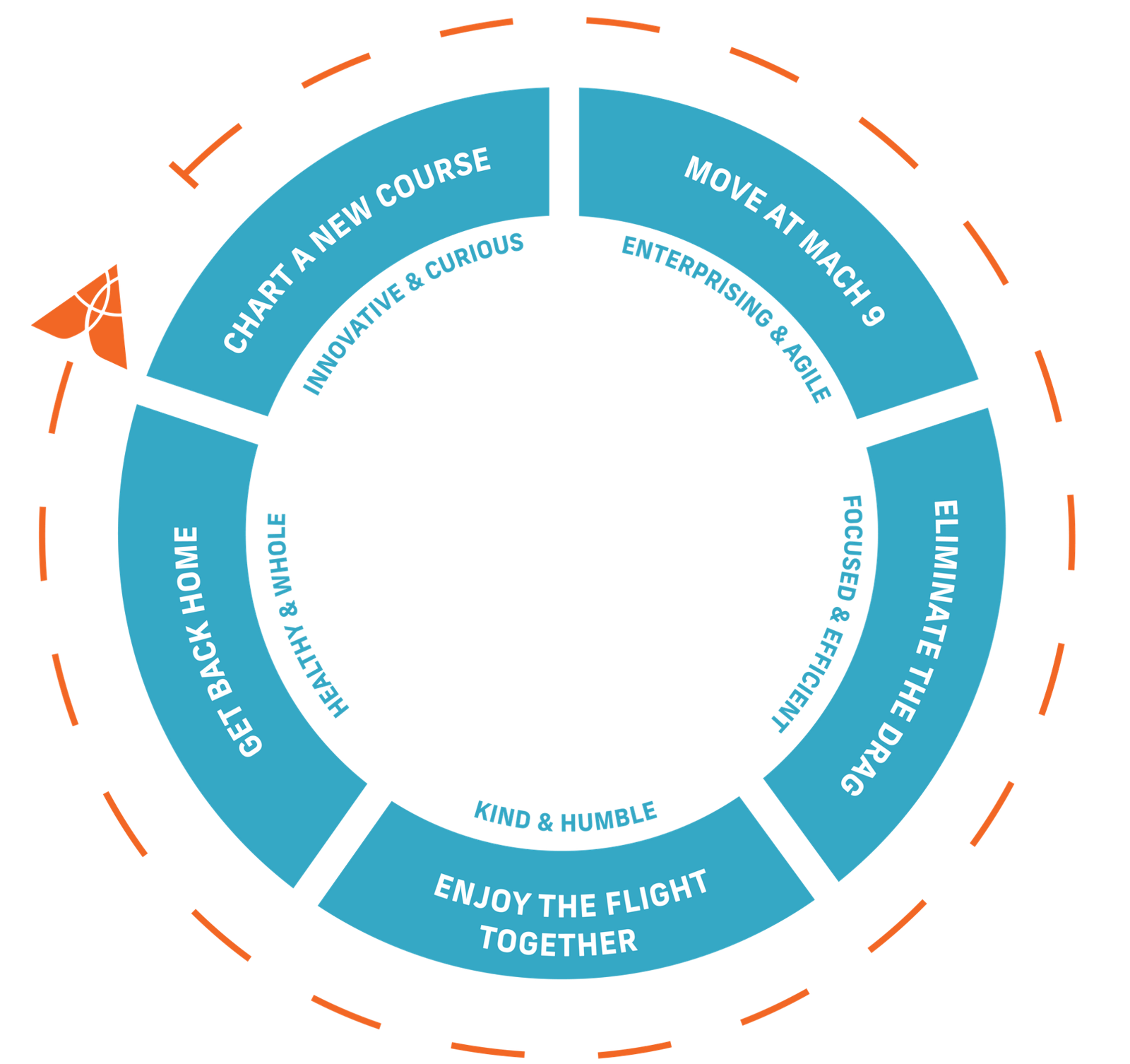
Curt Steinhorst was Head of People at Venus, where he wrote the Venus Flight Plan (five values that guided how the company worked, who it hired, and what it tolerated) and implemented the plan across the organization. Some of what the company tried worked. Some of it did not. In this keynote, he draws on both, and on fifteen years working with leaders across industries, to explore how teams work through uncertainty, what sustains people through demanding work, and whether greater pressure always produces better work.
The Venus Flight Plan · Read the five values
Chart a New Course
Innovative & Curious
We are innovators and pioneers driven by curiosity, exploration, and a commitment to responsible growth.
We solve hard problems – and the thousands of problems within every problem.
Move at Mach 9
Enterprising & Agile
We deploy rapid design cycles engineered by world class performers.
We succeed by doing. We are freed to fail fast...and fix even faster.
Eliminate the Drag
Focused & Efficient
We prioritize people's ability to get work done, and the type of attention it requires.
We avoid internal politics, fight bureaucracy, and eliminate wasteful meetings.
Enjoy the Flight Together
Kind & Humble
We are on this flight together, and all are welcome aboard.
We value the expertise each individual adds to our super team.
Get Back Home
Healthy & Whole
We commit to the rhythms that yield healthy and whole people capable of navigating life's unique challenges.
We value YOU as a part of VenUS.
“We were in the middle of a merger. His presentation on thriving in the midst of uncertainty was timely… and included tactics we could implement immediately.”
Can I Have Your Attention?
As producing information gets easier, deciding what deserves attention matters more. Built on over a decade of writing, researching, speaking, and advising companies on attention and workplace dynamics, this series takes up both sides of attention: protecting your own focus and earning someone else’s.
Can I Have Your Attention? · Talk 03
Finding Focus in a Distracting World
Focusing on what matters when everything is a priority, at work and beyond it.
Finding Focus in a Distracting World
Focusing on what matters when everything is a priority, at work and beyond it.Technology can take routine work off a team’s plate. It can also make it easier to send more messages, launch more projects, and fill every hour it saves. The question is whether it gives people attention back for work that needs their judgment, or simply raises the volume of work they are expected to keep up with.
Somewhere along the line, responding became the job and being reachable became proof you were doing it. A day cut into two-minute pieces by requests that have nothing to do with one another doesn’t add up to a day’s work, however many hours went into it. More often than not, the problem isn’t how much people have to do. It’s how divided their attention is, and because it got divided one reasonable choice at a time, that part a leader can change.
Drawing on over a decade of research and advising companies on attention and workplace dynamics, this keynote makes the case that distraction is confusion about what matters, and that the outcomes leaders are measured on, from productivity to how fast a team adapts to change to engagement and well-being, move when leaders protect attention on the team’s behalf. That takes a different way of approaching, measuring, and organizing work, one that respects the limit on human attention, because the same limit is what makes a person valuable once it’s pointed at the right thing.
For everyone in the room, it starts with deciding what deserves attention, recognizing what is pulling it away, and making room for the work and people they care about.
Can I Have Your Attention? · Talk 04
Breaking Through the Noise
Communicating so people hear it, believe it, and act on it.
Breaking Through the Noise
Communicating so people hear it, believe it, and act on it.Producing a message is easy now. Getting someone to pay attention, trust it, and act is still human work. Your ability to lead an organization or win a customer’s business depends on it. Information has exploded, publishing is free, and Graphite estimates that roughly half of newly published English-language articles are primarily AI-generated. What once captured attention now creates noise, and even what works today may not work tomorrow.
Why do people ignore information they need and pay attention to things they never intended to? The answer matters when you’re asking someone to reconsider a decision, support a change, or buy what you’re selling.
Your audience brings different experiences, expectations, and reasons for listening. And increasingly, they’re accustomed to information selected specifically for them. How do you get them to consider an idea they weren’t looking for, and might not initially want to hear?
In this keynote, Curt Steinhorst, bestselling author of Can I Have Your Attention?, draws on the science of attention to show you how to shape and deliver messages that break through the noise.
This presentation is for anyone whose work depends on influencing others. It can be tailored to the communication challenges specific to executives, sales professionals, and communications leaders. You’ll get beyond this week’s LinkedIn algorithm tricks and into what makes people pay attention when the noise is so loud.
“Curt delivers an ideal message for now... It has helped to enable a fresh start for many in the team.”
Not sure which keynote?
These talks are a starting point. Tell me what your audience is facing and I can make a recommendation, or we can build something from the ground up.
Beyond the keynote
Longer formats
Any of the four keynotes can run longer. A keynote can change how a group sees its work; deciding what to do differently takes more than ninety minutes. With three hours or a half day, attendees take the argument the keynote makes and put it to work on a challenge they are facing right now, and leave with something decided. And when the senior team has things to work through that only they can change, I can follow the keynote with a session for them.
- 01
Keynote typically 45 to 90 minutes
You tell me how much time the program allows and I write to it, down to 20 minutes if that is the window. The full argument, the stories behind it, and what to try first.
- 02
Extended keynote up to 3 hours
The keynote, then time for attendees to apply it: what it looks like in your organization and what you would change first.
- 03
Working session half day or full day
You bring the challenge and I build the session around it. A Farm Credit board retreat spent three and a half hours on meeting dynamics; Navy Federal built a half day around the daily challenges facing its communication leaders. Not trust falls.
Off the stage
Values & Operating Principles
Mission, values, and operating principles written specifically enough to shape behavior, settle arguments, and kill bad ideas early. More on values work →
Executive Communication Coaching
Private preparation for the moments where the words have to work: board presentations, investor pitches, company resets. Hall of Famers, Olympians, a UN address, and the investor meetings where Venus raised its money. More on coaching →
Questions planners ask
What will our audience take away from your keynote?
Every talk is customized, so the specific outcomes are set with you before the event. Across all of them, attendees leave with four things:
- Shared language for the conversations that are hard to have. Teams get words for what they have been avoiding.
- The unspoken assumptions made visible. The invisible norms nobody agreed to but everyone follows, the ones that add work, create conflict and waste time.
- Practical actions anyone can use the next day. Not a framework to implement. Things to do Monday.
- A shift in how they see the work and each other. What to let go of, what to focus on, why the work is worth the effort, and the assumption that the people beside them and above them are doing the best they can.
How do you customize your keynote for our organization?
Roughly 70% of a keynote is content that exists in some form, and 30% is built for your situation, industry and audience. Curt has about thirty hours of material from fifteen years of work and adds to it constantly, so customization is a question of what gets pulled and what gets written new, not whether it happens. The more you can tell him, the better that 30% gets. He starts with a call about what is actually going on, and will usually ask to talk with a few people who will be in the audience.
In his words: the days of a cookie-cutter speech ended a long time ago. He does not remember the last time he gave a speech he had already given. The world changes fast enough that anything written a year ago does not work now.
Curt is not an expert in your industry, and that is not what you are hiring him for. He has worked across enough of them to know which problems are actually about your industry and which ones only feel that way. The human parts of the work look remarkably similar in a rocket company, a bank and a record label.
How long are your keynote presentations?
You set the length and Curt writes to it. Tell him what the program allows and he prepares remarks to fit. A keynote typically runs 45 to 90 minutes, and he will build for a 20-minute slot if that is the window you have. An extended keynote runs up to three hours: the keynote, then time for attendees to put it to work on what they are facing. A working session runs a half day or a full day and is built around a challenge your organization is dealing with. Any of these can be followed by a session with the leadership team.
How do we choose the right keynote for our audience?
A 20-minute call with Curt is the fastest way to confirm it. The listed topics are foundations and starting points rather than a menu, since every speech is customized, so do not force-fit if what you need does not line up perfectly with one of them. That call will also tell you quickly whether Curt is the right speaker at all, and he will be the first to say so if he is not. He has no interest in taking an engagement that wants something he cannot deliver at the highest level.
Start from the challenges your organization is facing, or the themes your audience wants to hear about. It’s Not Rocket Science is the work on culture, leadership and change. Can I Have Your Attention? is the work on focus and communication.
Can we pair your keynote with a breakout or working session?
Yes, and the most common pairing is a keynote followed by an interactive session where attendees pick a specific challenge to work on, or take the keynote’s argument back to their own team. A session with the leadership team can also follow, for the things only they can change.
Do you have experience speaking to CEOs and executive-level audiences?
Curt speaks to executives as someone who has held the job. He was Head of People at Venus Aerospace and sat on the executive team there. His most common audience is owner and CEO groups, including YPO and WPO chapters, and he works often with intact executive teams. He has also spoken to leadership audiences at Nike, JPMorgan Chase, Deloitte, McDonald’s, Cisco, KPMG, Accenture and the United States Naval Academy. Executives and emerging leaders are the two audiences he most likes being in front of.
What industries and organizations have you spoken to?
Financial services and insurance, technology and SaaS, aerospace, professional services, healthcare and pharma, manufacturing and automotive, hospitality, real estate, consumer goods, entertainment, and government and military.
Clients include JPMorgan Chase, Prudential, Fidelity, Wells Fargo, Citi, Transamerica, Deloitte, KPMG, Accenture, SAP, Cisco, AT&T, Merck, AbbVie, Reckitt, General Motors, Honda, Cadillac, Raytheon, Marriott, Best Western, Southwest Airlines, Greystar, Big Machine Label Group, Nike, McDonald’s and the United States Naval Academy.
He also works with membership and professional associations, including MDRT, and with HR, People and communications teams inside organizations. He is the only three-time speaker for ICAN, the largest annual women’s leadership conference in the Midwest.
Where can we watch you speak?
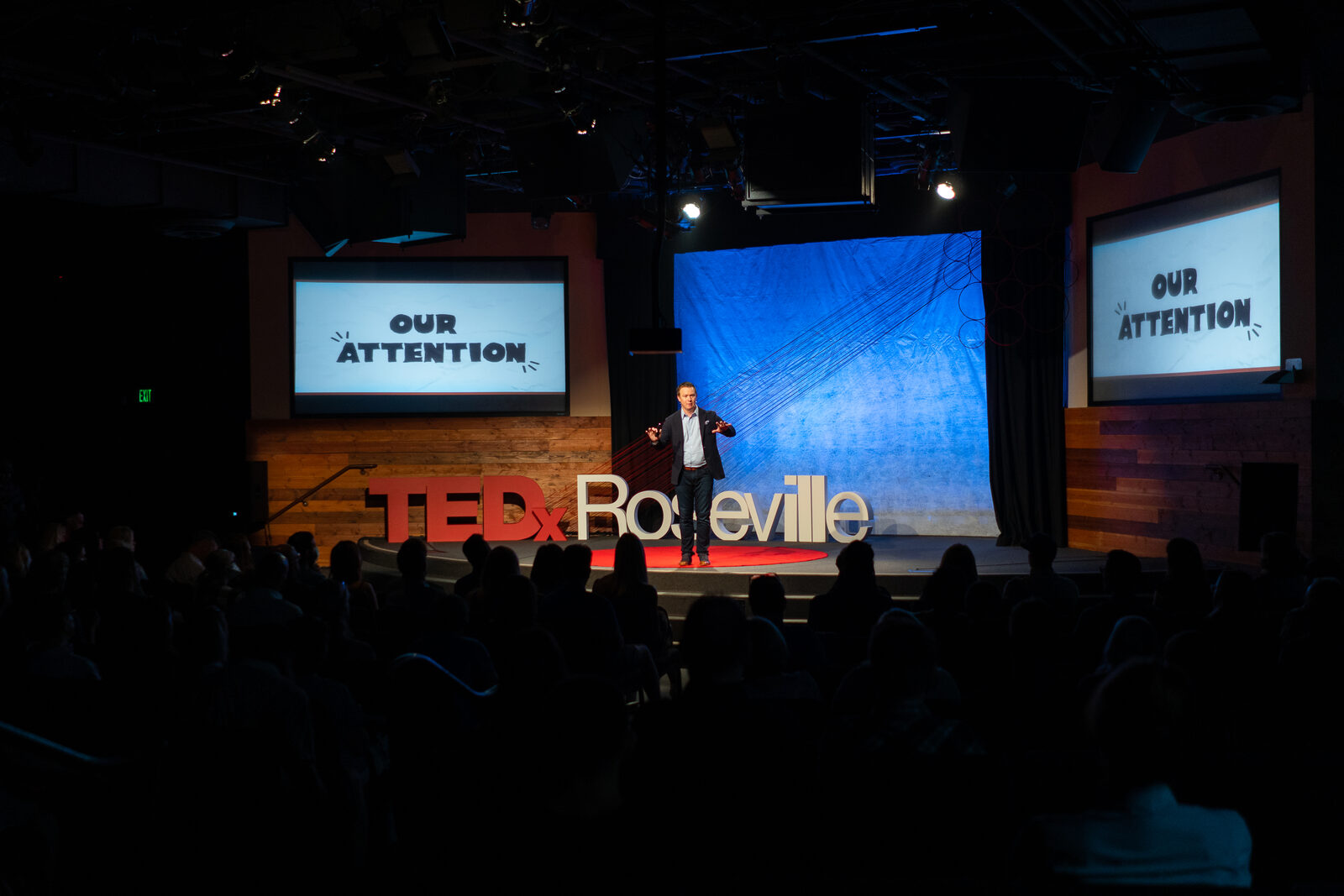
Start with the demo reel at the top of this page. You can also watch my TEDx talk, How to Like Work Again... No, Seriously, along with more talks and interviews on the Articles & Videos page.
Do you have complete talks available to watch online?
My complete TEDx talk is on the Articles & Videos page. Other complete, uncut keynote videos aren’t public, but they’re available. Just ask.
Do you offer virtual keynote presentations?
Yes. Curt presents virtually with broadcast-quality lighting and audio from his own setup, and when an event calls for it he has access to a professional studio at cost, billed through or paid directly by the client with no markup.
“Curt’s presentation at our leadership retreat was exactly what we needed.”
Just the pieces you need.
Keynote topics
The four current talks: a one-page overview, the detailed topic guide with audience outcomes, and plain text for your program.
One-page overview PDF ↓Detailed topic guide PDF ↓Topic text TXT ↓Planning an event?
To check a date, use the contact page or email curt@curtsteinhorst.com. I also work through speaker bureaus.